
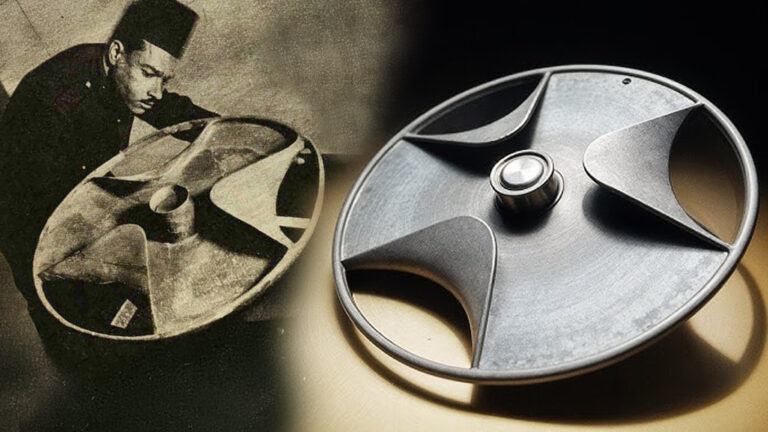

The Schist Disk is a remarkable artifact discovered in the ancient burial ground of Saqqara. The disk stands out due to its unique characteristics. Measuring approximately two to two-and-a-half feet in diameter, it exhibits a remarkable craftsmanship that has intrigued scholars. Its intricate design features a series of precise, concentric circular patterns with a central hub, reminiscent of a wheel or gear. This intricacy and precision in its makeup led many to suggest that it could be a remnant of a lost ancient technology or even part of an advanced mechanical device.

The disk is notably composed of quartzite, a material known for its hardness, rated 7 out of 10 on the hardness scale. This fact alone has led to questions about its creation, as the dynastic Egyptians of the time are not believed to have had the technology to work with such hard materials. Mainstream historians say it was used for directing water, however the three lobes featured by the disk are not angled in a way that would suggest a function in moving or directing water. Instead, it appears to have been part of a rotating mechanism around a central axis.

The craftsmanship displayed in the disk is extraordinary, with thin blades or petals extending from the central hub, each uniformly shaped and symmetrically arranged. Adding to its enigmatic nature are the curious burn marks found on the disk. These marks have not been definitively explained, contributing to the overall mystery of the artifact and linking it even more to the theory that it was part of a larger mechanical device or machine.
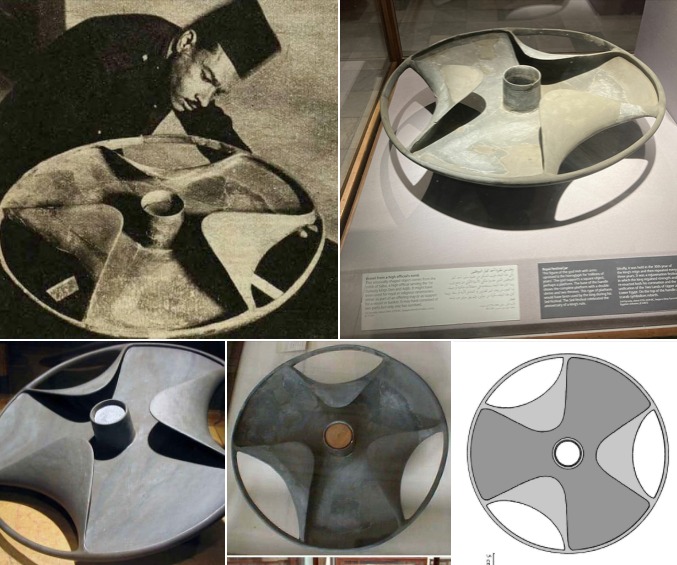
Some have hypothesized that it might have been part of an ancient timekeeping device, an astronomical instrument, or a piece of machinery used for unknown purposes. Other artifacts that some connect to the disk are these three pieces, which look very much like some sort of gear parts that were once part of a mechanical device.
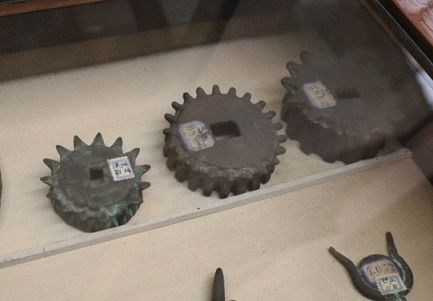
The speculation that the Schist Disk and these gear parts were a remnant of advanced technology is fueled by comparisons with artifacts from other ancient civilizations known for their engineering prowess. The intricate design of these pieces bears some resemblance to components found in later technological artifacts, such as the Antikythera mechanism, an ancient Greek device used for tracking celestial movements. This resemblance has led to theories suggesting a shared knowledge of mechanical engineering among ancient civilizations, possibly hinting at a now-lost advanced technological tradition.
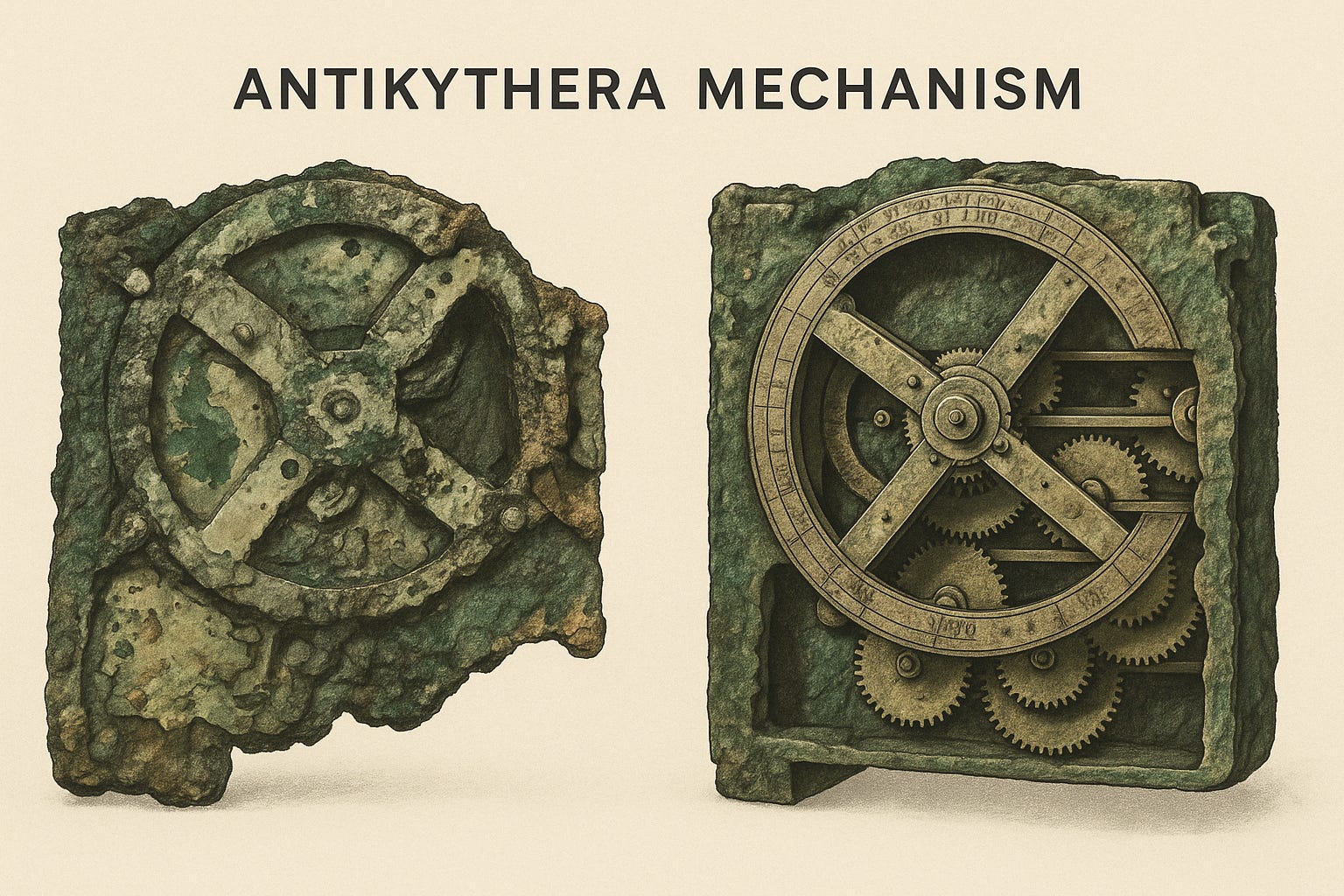
The Antikythera Mechanism, often referred to as the world’s first computer, stands as one of the most extraordinary discoveries in the history of archaeology. Unearthed in 1901 from a Roman-era shipwreck off the coast of the Greek island of Antikythera, this ancient device has continued to astound scientists for over a century. Its intricate system of bronze gears, dials, and inscriptions demonstrates a level of technological sophistication that would not be matched again for more than a thousand years.
When the object was cleaned and examined, scholars were stunned to find a complex system of interlocking gears—unlike anything known from antiquity. This device would later become known as the Antikythera Mechanism, and it would revolutionize our understanding of ancient science and engineering.
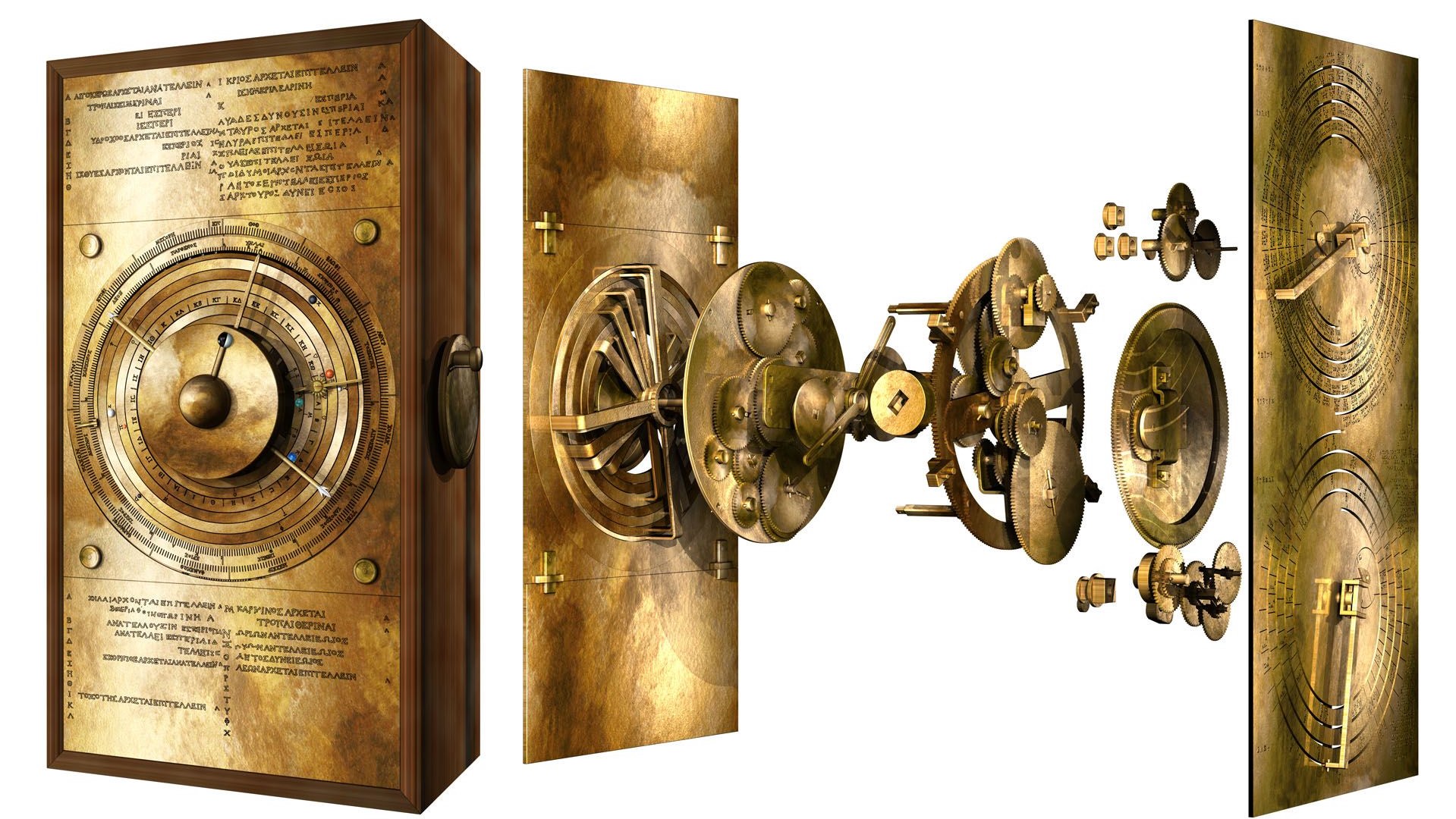
Over decades of research, scientists determined that the mechanism was far more than a collection of gears—it was an analog computer designed to model the heavens. The Antikythera Mechanism could predict the positions of the Sun, Moon, and possibly the planets. It tracked lunar phases, solar cycles, eclipses, and even the timing of the ancient Olympic Games.
Composed of at least 37 bronze gears, the mechanism operated through a hand-cranked system that displayed celestial information on a series of rotating dials. The front dial showed the movements of the Sun and Moon through the zodiac, while the back dials tracked the Metonic Cycle (a 19-year period after which lunar phases repeat on the same calendar dates) and the Saros Cycle (used to predict solar and lunar eclipses).
The device’s precision is breathtaking. Some of its gears contain teeth smaller than 1 millimeter, crafted with such accuracy that experts have compared them to those found in 18th-century European clocks. The inscriptions, written in Koine Greek, provided operating instructions and detailed astronomical data—essentially making it the user manual of a 2,000-year-old machine.