
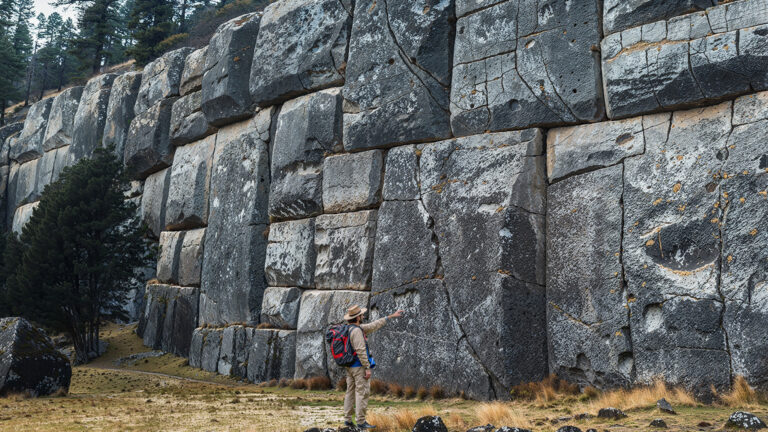

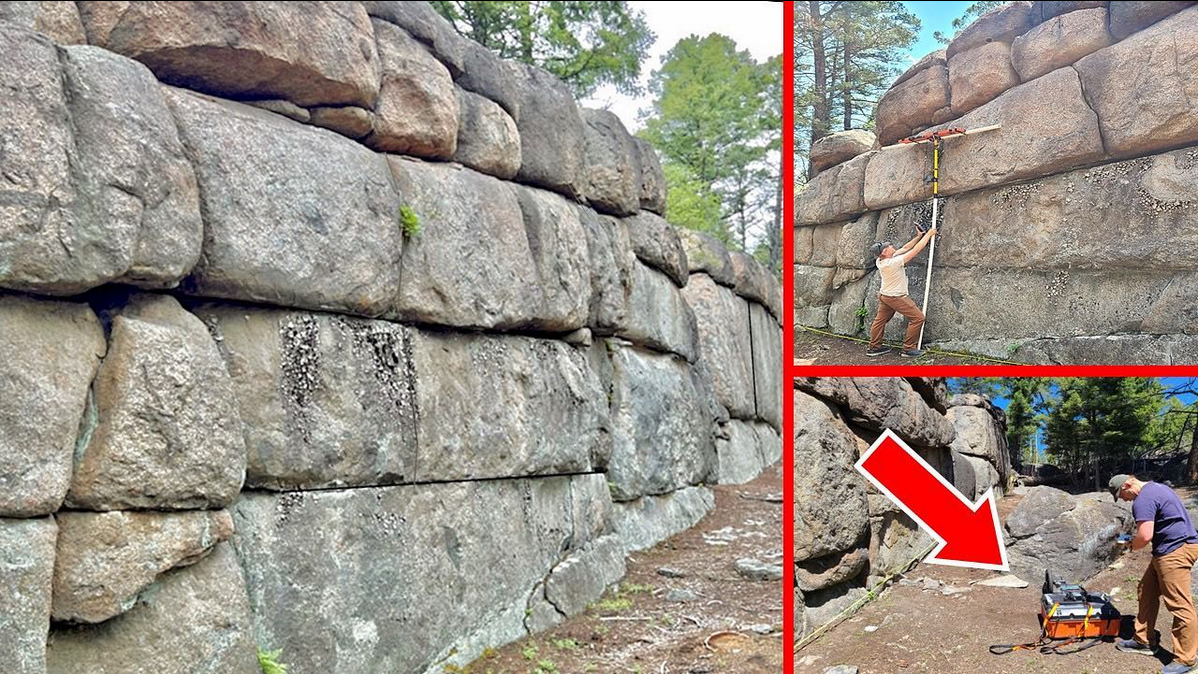
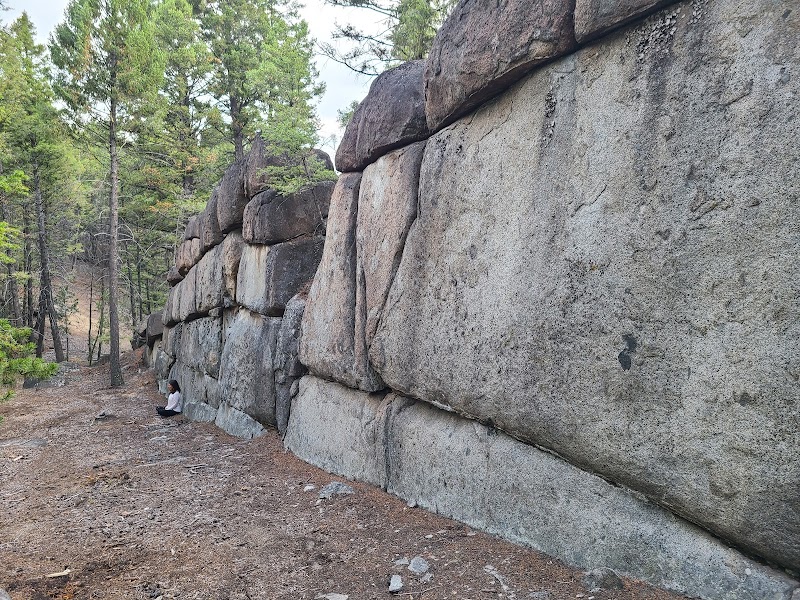
Deep in the remote mountainous wilderness of Montana lies a remarkable structure known as the Sage Wall. This imposing megalithic wonder is composed of massive polygonal granite stone blocks, intricately stacked and aligned in a perfectly straight line that extends up to 275 feet (around 84 meters) in length—though many believe it continues underground. Its height reaches 25 feet (8 meters), with the largest of the stone blocks weighing 91 tons. Some researchers suggest the wall continues an additional 15 feet beneath the ground, making it nearly 40 feet tall if fully excavated.

The wall’s unique characteristics—straight lines, sharp corners, and angular formations—set it apart from the natural geological formations commonly found in the region. The granite stone blocks appear as if they were cut, fitted, and interlocked like a giant stone puzzle. Granite does not naturally split into consistent 90-degree angles, which has led many to speculate that the Sage Wall may be the remains of an ancient megalithic structure.
Discovery of Sage Wall
The reason the Sage Wall has remained virtually unknown is due to its location on private land, hidden for centuries beneath dense forest cover. The landowners, Christopher Borton and Linda Welsh, were unaware of its existence for years. Nestled on a steep mountainside, the wall had been concealed by thick foliage and fallen trees, making it almost impossible to detect.
The site came to light only recently when the owners decided to clear a heavily forested section of their property. As they removed debris and underbrush, they stumbled upon what appeared to be a massive, ancient wall. This accidental discovery revealed the previously hidden Sage Wall, sparking immediate fascination among researchers, geologists, and alternative historians alike.
The Sage Wall’s polygonal design bears a striking resemblance to megalithic masonry found across the world—from Peru’s Sacsayhuamán, to the Osirion of Egypt, to ancient sites in Turkey, Greece, Easter Island, and Japan. Could Montana’s Sage Wall be part of this global network of prehistoric construction?

Skeptics argue that it is a natural geological formation. However, others point out features that challenge this notion—particularly the presence of “knobs” on the surface of the stones. These protrusions appear across megalithic sites worldwide, yet their purpose remains unknown.
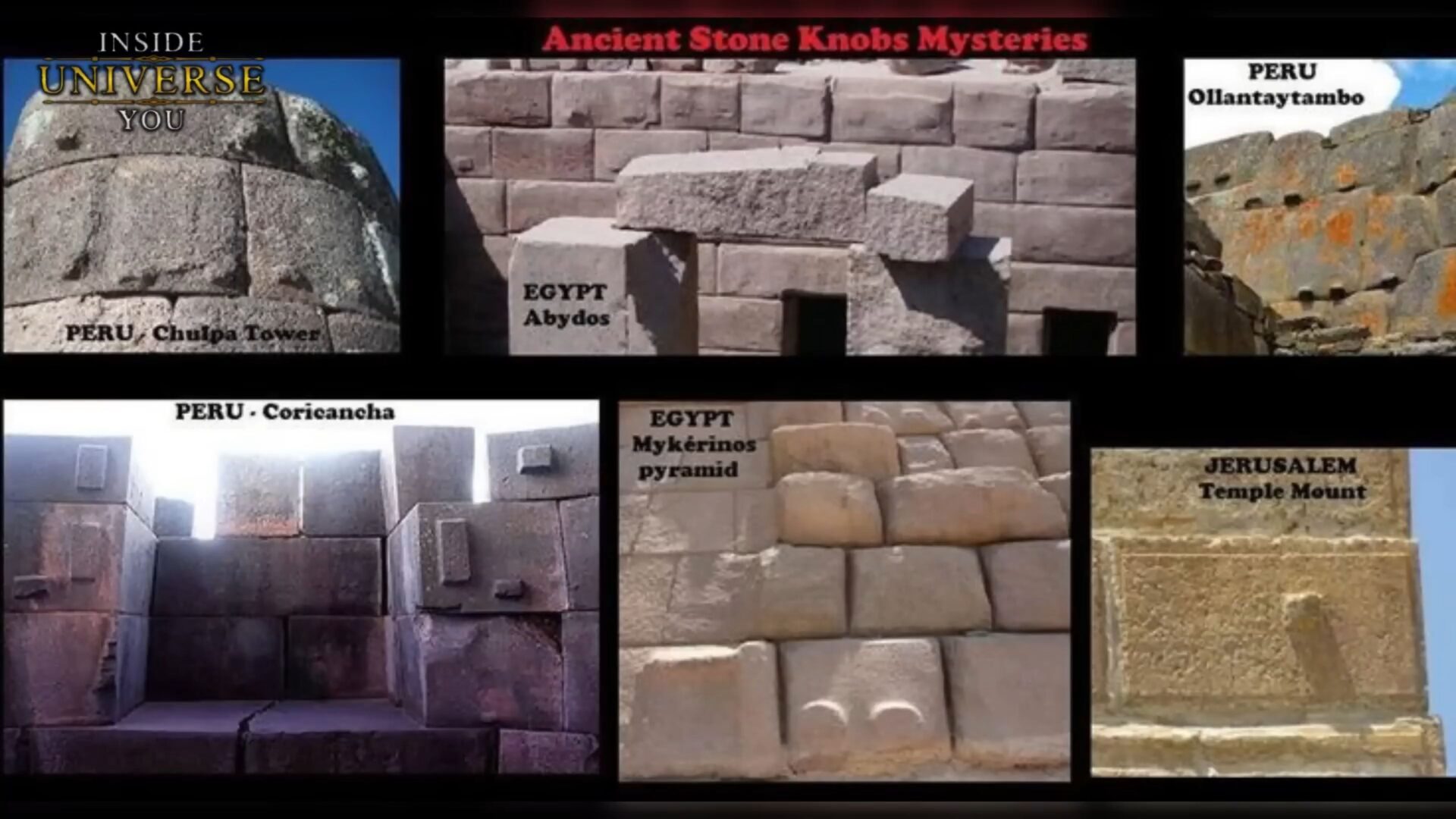
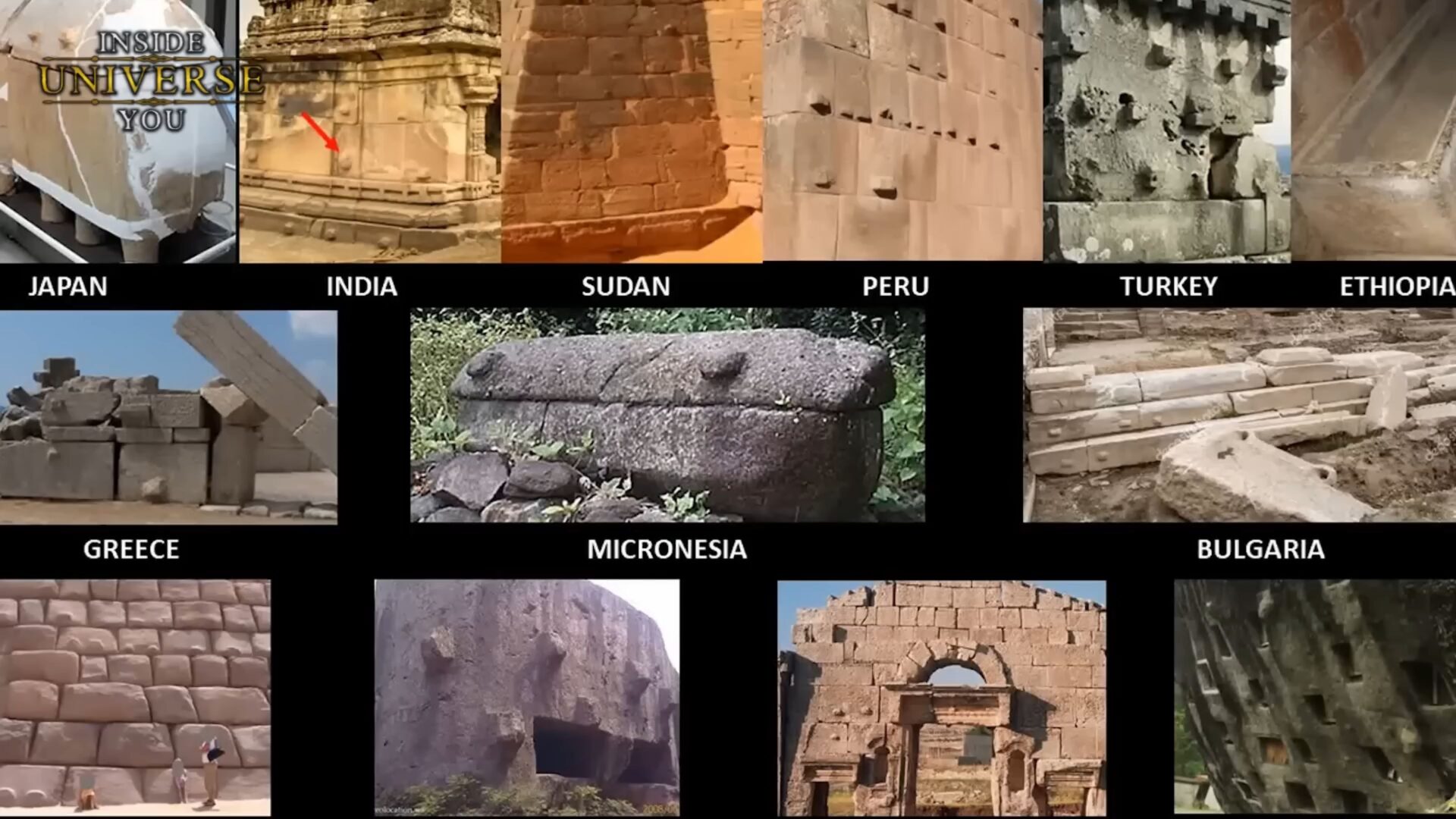
Researcher Michael Collins, host of the Wandering Wolf YouTube channel, visited the Sage Wall and documented these same knobs—identical in form to those seen at ancient sites in Peru and Egypt. Collins also identified additional walls, channels, and blocks in the surrounding area that seemed artificially cut and aligned, hinting that the Sage Wall might be part of a larger, buried complex.
Collins observed artificial-looking channels, grooves, and circular cuts on the stones—features reminiscent of precision machining rather than random erosion. Some of the smooth chutes above the wall appear as if they were polished or designed as water channels, while other stones contain cup marks, small circular cavities found at megalithic sites around the world.

The discovery prompted the landowners to organize a team of scientists and geologists to study the site. Using ground-penetrating radar, magnetic susceptibility testing, and soil sampling, researchers found several anomalies. Most notably, the granite blocks exhibited strong magnetic properties—so powerful that magnets could cling to the vertical surfaces, something highly unusual for granite.
Ground-penetrating radar also revealed that the structure extends 15 feet below ground and rests upon a perfectly flat foundation, an extremely rare occurrence in nature.

The Sage Wall has also drawn the attention of Dr. Semir Osmanagić, the Bosnian-American researcher known for his work on the Bosnian Pyramid Complex. Osmanagić personally investigated the site and concluded that the Sage Wall is most likely man-made, possibly constructed before the end of the last Ice Age—over 11,700 years ago.
He noted that the wall is perfectly oriented toward the winter solstice, a feature consistent with ancient megalithic architecture found across the globe. Osmanagić suggested that whoever built it must have possessed advanced technology or knowledge of geomagnetic energy, now lost to time.
The wall’s location also appears strategically significant. Situated between the Cordilleran and Laurentide Ice Sheets, the site lies along what would have been a prehistoric migration corridor connecting Asia and North America via the Bering Land Bridge. It also sits near three major river systems leading to three different oceans—a prime location for trade, settlement, or spiritual activity in ancient times.

Is the Sage Wall Man-made or Natural?
While alternative researchers point to the wall’s geometry and magnetism as evidence of advanced prehistoric engineering, others argue that the Sage Wall is simply an unusual geological formation.
Explorer Timothy Alberino conducted an on-site investigation and concluded that the fissures and cracks follow natural paths consistent with volcanic and tectonic stress. He noted that if humans had built the wall, they would have staggered the stones for stability, not aligned them vertically along fault lines.
Furthermore, the lack of cultural artifacts—such as pottery, tools, or carvings—supports the geological explanation. Geologist Dr. Stuart Parker added that the knobs may form naturally through differential erosion, where softer sections of rock erode faster than harder mineral deposits, leaving raised protrusions.
The Mystery of Sage Wall Endures
For now, the true origin of Montana’s Sage Wall remains a mystery. Whether a geological marvel or the remnant of a prehistoric megastructure, its precision, magnetism, and massive scale make it one of the most intriguing sites in North America.
Future research involving LiDAR mapping and deep excavation may finally reveal the truth. Until then, the Sage Wall continues to spark debate and wonder—an enigmatic monument that challenges our understanding of both nature and ancient history.
Those interested in visiting the site can contact Sage Mountain Center, where tours are occasionally offered to this extraordinary and still-unexplained landmark.
