
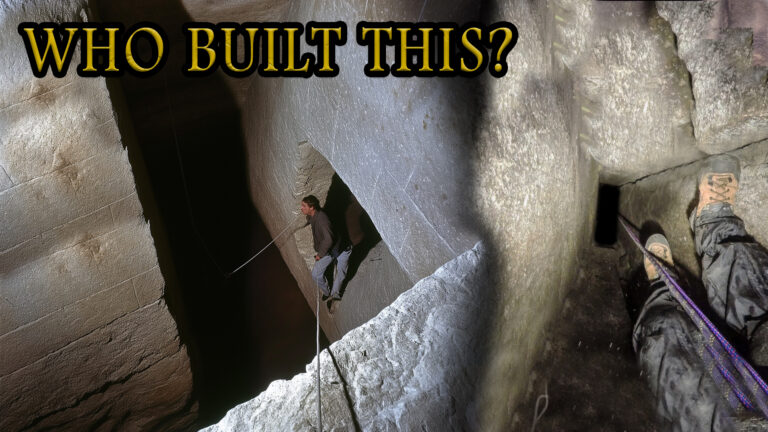

In the remote and rugged region of the North Caucasus, within the Kabardino-Balkaria Republic of the Russian Federation, the landscape is defined by towering mountains and untamed wilderness. Yet, in 2011, Russian speleologist Arthur Zhemukhov made an astonishing discovery at the Khara-Hora mountain peak—one that could potentially rewrite the history of ancient human civilization.
Zhemukhov, a scientist specializing in the study and exploration of caves, discovered a deep, narrow, vertical shaft, seemingly swallowed by the Earth itself. What was remarkable was not just its depth, but its construction—parallel stone slabs perfectly geometric, suggesting an artificial origin rather than a natural formation.
Curious and determined, Zhemukhov and his team ventured deeper into the shaft, uncovering what would become one of the most mysterious and controversial subterranean structures ever found – the Khara-Hora shaft.
A Megalithic Shaft Beneath the Mountain
The walls of the shaft were straight and polished, extending 40 meters (130 feet) deep before opening into a massive underground hall roughly 36 meters (118 feet) high. The shaft’s total explored dimensions—from the upper entrance to the lower platform—spanned over 100 meters (350 feet).
The smooth, vertical walls were constructed from massive megalithic blocks fitted together at right angles with astonishing precision. Some sections even appeared to include columns carved directly from the stone.

Zhemukhov and his team were stunned. Whatever this structure was, it clearly wasn’t a natural cave system. It was, as they concluded, an artificially constructed underground complex of enormous scale.
Zhemukhov noted the polished surfaces and massive blockwork resembled those of the Grand Gallery inside the Great Pyramid of Khufu in Egypt, where the stones are of comparable size. Like Egypt’s advanced ancient architecture, this structure may have served a technological or ritual purpose—possibly as part of a much larger underground complex.
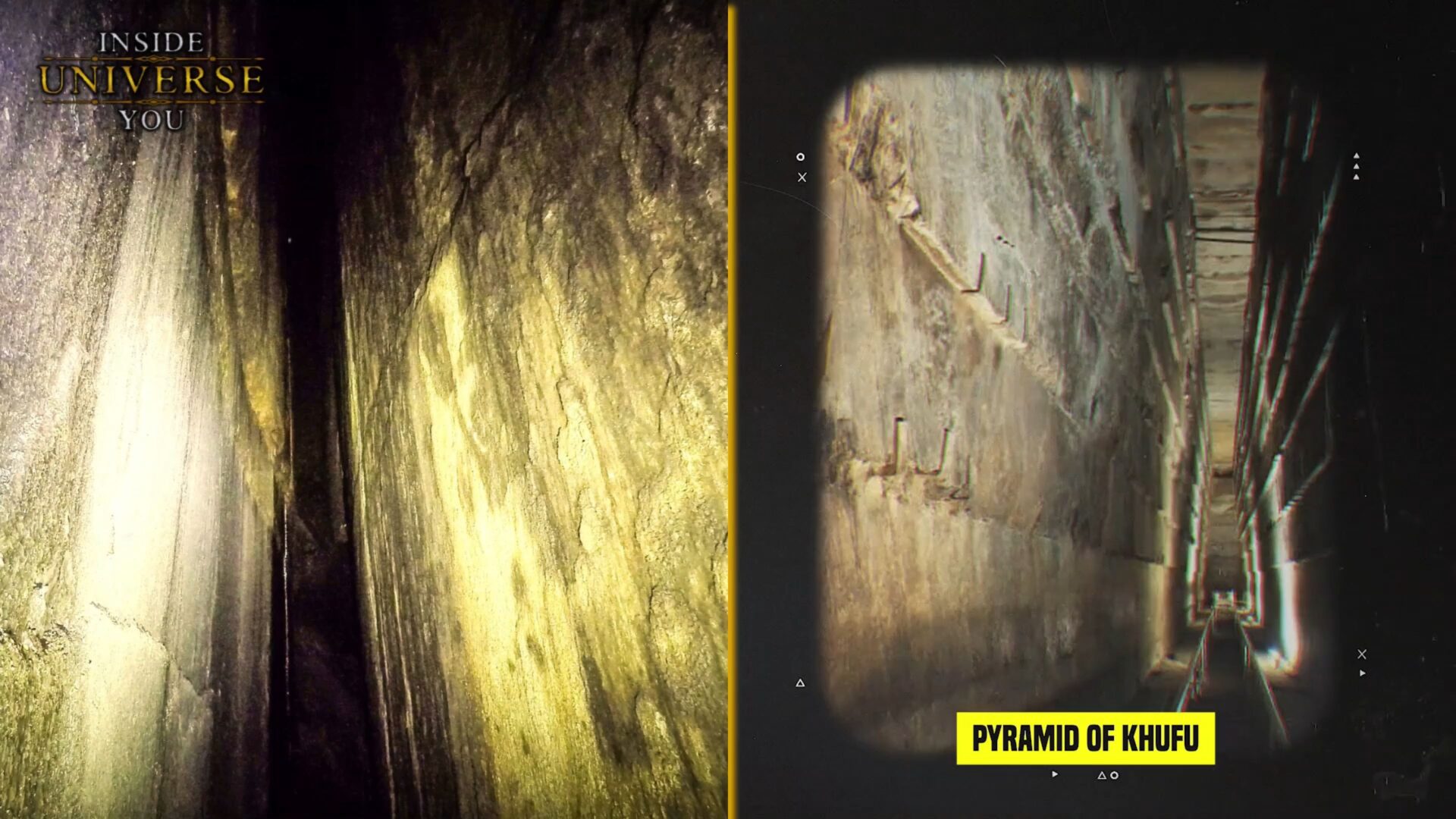
Descending into the Khara-Hora Shaft
It took more than an hour for the expedition to reach the bottom of the shaft, requiring advanced climbing expertise and endurance. Even so, they could only explore a small portion of the structure. Narrow side passages extended even deeper, but many were too tight to traverse.
The team noted that no known cave system on Earth features perfectly flat, polished walls made of rectangular blocks, nor the seam-like joints found between them. These characteristics ruled out any natural geological process.
This raised a fundamental question: How could 200-ton stone blocks be cut, shaped, and assembled with such accuracy deep beneath the Earth’s surface? What kind of technology or machinery could have made this possible in prehistoric times?

Additional expeditions were organized by Vadim Chernobrov, coordinator of Cosmopoisk, a Russian organization researching anomalies and ancient mysteries. Together with Zhemukhov, Chernobrov entered the shaft and filmed their descent for a televised documentary.
Chernobrov later mapped the interior and measured the dimensions, producing detailed schematics that revealed a symmetrical, chamber-like structure unlike any natural cave. A 3D model of the shaft, created by researcher Vladislavs Gusca, showed that the structure resembled an artificial installation rather than a geological formation—its vertical precision evocative of industrial engineering.
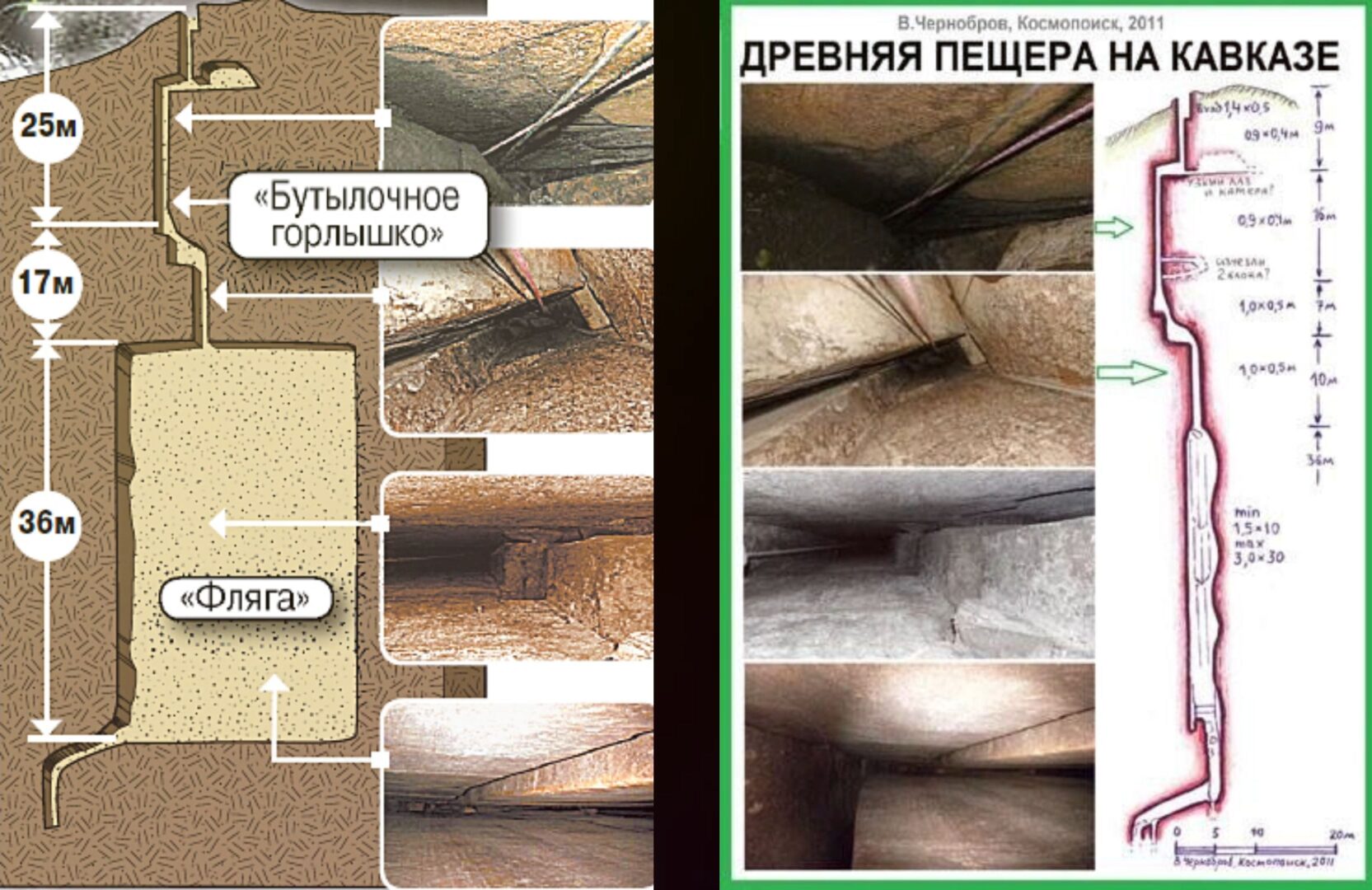
What lay beyond the unexplored sections remains unknown. Could this shaft be only the entrance to a larger subterranean complex—or even the remnants of a long-lost technology?
Purpose of the Khara-Hora Shaft
Chernobrov theorized that the Khara-Hora structure was not designed for human habitation. The narrow passages and tiny cavities—some too small for a hand to fit—suggested a technological purpose. These recesses extended far into the rock, beyond the reach of artificial light.
He compared them to the mysterious internal shafts of the Egyptian pyramids, which also feature tiny tunnels and deep chambers that serve no apparent architectural or ceremonial function. Like those Egyptian passages, the Khara-Hora shaft lacked torches, burn marks, or artifacts that would indicate human activity, implying it was built for a mechanical or energetic purpose, not ritual use.

Chernobrov speculated it could have been part of an ancient energy system, a resonator, or even a seismological or power-generation device. Others proposed it might be the subterranean section of a pyramid that once stood above the mountain, now long eroded away.
Climbers reported a constant airflow emanating from deep below—perhaps indicating ventilation systems or interconnected tunnels beneath the surface.

Nazi Expeditions and the Search for Underground Cities
Zhemukhov’s discovery was not purely coincidental. He had long been researching Nazi archives from World War II, particularly the activities of the Ahnenerbe, an occult research institute under Heinrich Himmler.
The Ahnenerbe sought evidence of ancient Aryan civilizations and lost technologies, influenced by the esoteric ideology of the Thule Society. In the late 1930s, Nazi expeditions to Tibet were launched in search of the mythical Shamballa, believed to contain ancient knowledge and powerful energy sources.
During Operation Edelweiss in 1942, as the Germans advanced toward the Caucasus oil fields, members of the Ahnenerbe were allegedly investigating the Khara-Hora region, convinced that it might conceal the underground remnants of an ancient Aryan city.

Near the entrance of the shaft, researchers found a swastika carved into a boulder, believed to have been left by Nazi explorers marking their discovery. Even more intriguing was the discovery of an older swastika carving, predating the war—suggesting that the symbol may have originated from the ancient civilization that once inhabited the area.
Could the Nazis have been trying to uncover this civilization’s lost knowledge or emulate its symbols of power?
Zhemukhov’s search was guided not only by historical archives but by ancient local legends. The peoples of the North Caucasus have long spoken of vast underground cities and hidden complexes buried deep beneath the mountains.
Zhemukhov believed that the Khara-Hora shaft was merely the entrance to one of these ancient subterranean networks, with many more undiscovered chambers stretching beneath the region. He planned further expeditions, hoping to find interconnected tunnels, halls, and megalithic chambers.
Tragically, before these plans could be realized, disaster struck.
The Tragic Fate of the Researchers
In 2015, just one day after reporting a major new finding, Arthur Zhemukhov was struck and killed by a car under mysterious circumstances. Two years later, Vadim Chernobrov, founder of Cosmopoisk and Zhemukhov’s collaborator, died of cancer. Three other individuals associated with the Khara-Hora research also died unexpectedly.
Whether coincidence or something more sinister, these deaths effectively ended the investigation. Since then, almost no new information has emerged about the site.

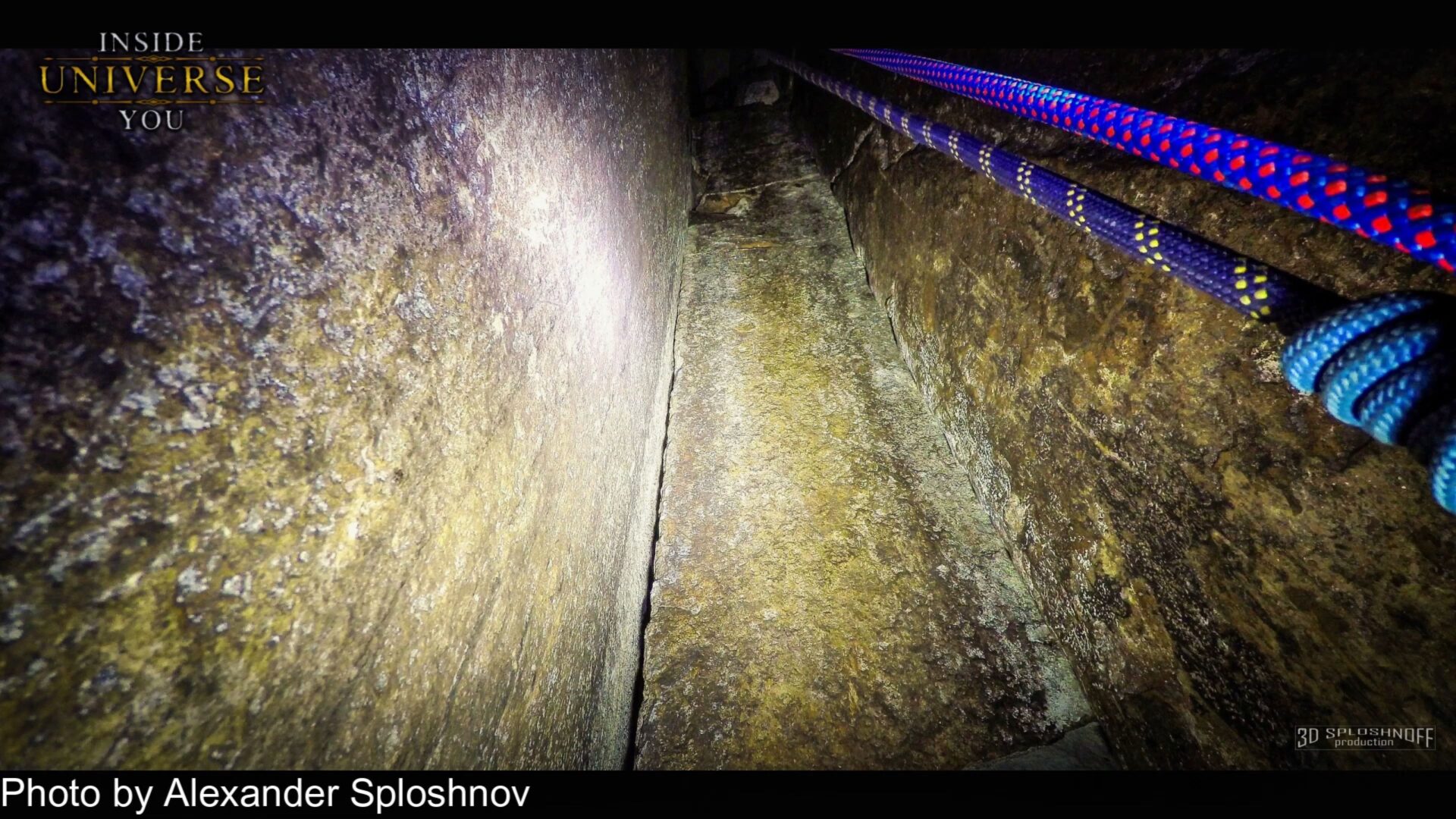
In 2017 and 2018, explorer Alexander Sploshnov ventured to the Khara-Hora region and descended into the shaft himself, documenting his journey in extraordinary photographic detail.
His images revealed smooth, geometrically perfect walls, massive rectangular blocks, and what appeared to be machine-cut surfaces. Around the entrance, he found numerous artificial-looking formations, buried stone alignments, and flat slabs with visible cutting striations—suggesting large-scale quarrying or construction.
Several photos show massive stacked blocks with right angles and polished surfaces, contrasting sharply with the surrounding natural rock. Some stones even display marks resembling modern machinery cuts, hinting that the entire area might have once been an ancient quarry or megalithic construction site. His documentation remains one of the most comprehensive modern records of the Khara-Hora shaft.
A Mystery Buried in Stone
The discovery of the Khara-Hora shaft in the North Caucasus remains one of the most enigmatic archaeological findings of the 21st century. It raises profound questions about ancient engineering, forgotten technologies, and hidden civilizations buried beneath the Earth.
Some believe it to be undeniable proof of a technologically advanced prehistoric civilization—a remnant of a world lost to cataclysm. Others dismiss it as an unusual geological formation.
Whatever the truth, the Khara-Hora shaft stands as a haunting mystery. With its polished megalithic walls, unexplored depths, and the tragic fates of those who sought to uncover its secrets, it continues to capture the imagination of explorers and researchers alike.
If one day it is proven to be artificial, the Khara-Hora structure would not only be one of the largest megalithic sites on Earth, but also one of the most important discoveries in human history—a gateway to an ancient world long forgotten.